

How much does a polo pony cost? UK prices explained
How much does a polo pony cost in the UK? Honest price bands from club schoolmaster to medium goal, what drives them, and the true annual cost of keeping one.
How much does a polo pony cost? Somewhere between three thousand pounds and the price of a small house — which is another way of saying the question deserves a better answer than it usually gets. Here is the honest version: most playing ponies in the UK change hands between £8,000 and £20,000, the outliers either side exist for reasons you can learn to read, and the purchase price is the smaller half of what ownership will actually cost you. Our complete guide to buying a polo pony covers the how; this is the how much.
How much does a polo pony cost to buy?
These are the ranges we see across the UK market this season. They will not surprise any dealer, and they should anchor every conversation you have with a seller.
| Typical price | What you are buying |
|---|---|
| Under £8,000 | Age, greenness or a question mark. Occasionally a genuine bargain; usually a project. |
| £8,000–£12,000 | A steady club-level schoolmaster — the sensible first pony. |
| £14,000–£20,000 | A made low goal pony in her prime, with the record to prove it. |
| £25,000 upwards | Proven medium goal ponies — sometimes well upwards. |
| A premium over all of the above | Imported Argentine-bred ponies with a proven record. |
Notice the gap between £12,000 and £14,000. It is real. That is roughly where ponies stop being bought to learn on and start being bought to win on, and sellers price the difference with confidence.
The bands assume home-produced, largely thoroughbred-based ponies — the affordable backbone of British club polo. Argentine imports are a different market. The Polo Argentino has been bred for this game over generations, usually arrives properly made, and for a good mare with proven bloodlines the ceiling is wherever the seller says it is.
What actually sets the price
Four things, in roughly this order.
Schooling. The single biggest lever. A pony that stops square, turns off the leg, takes a ride-off calmly and neck-reins one-handed has had years of expensive, skilled work poured into her — and every hour of it is in the price. "Green" is the discount word; "made" is the premium one.
The record. Where has she played, at what level, and under whom? Three full seasons of club and low goal polo carrying an amateur is worth more than one dazzling tournament under a professional, because it proves the pony works for a rider like you. A record you can verify moves a pony up her band; a story you cannot moves her down it.
Age. The sweet spot — roughly seven to eleven — commands the top of every band: made, proven, seasons left. Either side of it the price softens. A four-year-old is cheaper because the making is still to pay for; a fourteen-year-old is cheaper because the seasons are running out, which for a first buyer is often exactly the bargain to take.
Breeding and origin. Purpose-bred polo blood costs more than a converted racehorse, and an import bill is in the price too. You are not paying for sentiment: generations of selection for stop, turn and temperament genuinely show up on the field. Whether they are worth the premium over a good British-produced thoroughbred at half the money depends entirely on your level.
What one season of schooling is worth
Here is the sum that explains most of the price list. A season with a professional producer — schooling livery, shoes, slow chukkas, tournament outings — costs somewhere around £4,000 to £6,000. When it works, it moves a pony up a full band. When it does not, the money is spent anyway. That is why the difference between a £10,000 pony and a £15,000 pony is usually one season of professional schooling: the seller of the made pony has already taken the risk that it might not work, and the premium is the fee for absorbing it.
The keep: what a polo pony costs per year
The purchase price is the entry fee. Everything after it is the subscription.
The polo year splits in two, and so does the bill: turned away at grass through the winter (cheap), stabled, fit and in work through the season (not cheap). Realistic annual figures for one pony in the UK look like this:
| Cost | Typical annual figure |
|---|---|
| Livery — winter at grass, stabled in season | £3,500–£8,000 |
| Shoeing — a full set every 4–6 weeks | £700–£1,200 |
| Vaccinations, teeth and worming | £250–£450 |
| Insurance — vet fees and mortality | £400–£900 |
| Transport to chukkas and tournaments | £500–£1,500 |
| Tack, bandages, rugs and repairs | £300–£600 |
| Realistic total | £6,000–£12,500 |
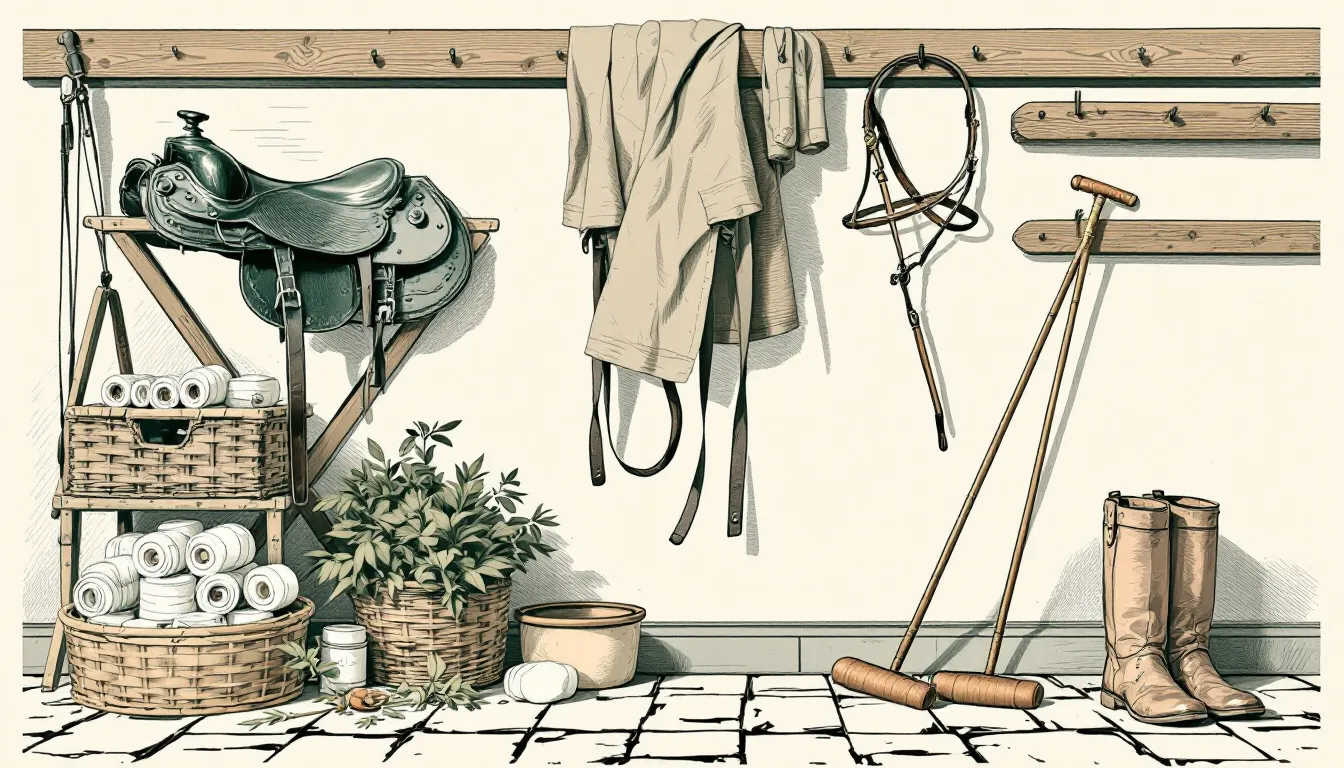
Call it £500 to £1,000 a month, every month, for as long as you own her. The British Horse Society's horse care and welfare guidance puts sensible baseline figures on keeping any horse; polo sits at the upper end because fitness work, frequent shoeing and a diesel habit come with the sport.
Note what the table does not include: club membership, chukka fees and tournament entries. That is the price of your polo, not your pony — your Hurlingham Polo Association affiliated club will tell you exactly what a season costs before a pony is ever factored in. And remember that serious polo is a string game; every figure above multiplies by the number of ponies in the line.
The rule from our buying guide bears repeating with the numbers now attached: if the purchase price is all you can afford, you cannot afford the pony.
Why the cheap pony is often the expensive one
The £4,500 pony is cheap for a reason — age, education, soundness or temperament — and the discount is the market's estimate of the risk. Suppose the reason is education. You pay £4,500, then £5,000 for the season of schooling she needs, and you now have £9,500 in a pony that may or may not have come out the far side of it — against the £10,500 schoolmaster who had already answered the question on the day you tried her.
Meanwhile the keep does not discount. The field, the farrier and the lorry charge exactly the same for a pony that cannot stop as for one that can. Two years of running costs on a pony that never makes it is £15,000 spent finding out, which is why the dearest pony most people ever own is the cheap one.
Whatever the band, spend a few hundred pounds on a full five-stage vetting before money moves — on a playing pony it is the cheapest line in the whole budget, and we have covered what a polo vetting involves and what it costs separately. The genuinely cheap good pony does exist, to be fair: the honest seventeen-year-old schoolmistress stepping down to light chukkas can be the best money in polo. But she is cheap because her seasons are finite, not because nobody noticed her.
Spending it well
The pattern in all of this is simple: buy the made pony at the very top of your budget rather than the project plus change. The project's price gap gets spent anyway — on schooling, on keep, on a season of your own polo going sideways — with none of the certainty.
When you are ready to put these numbers against real animals, browse the ponies for sale on PoloPonies: every listing states age, height, playing level, schooling status and price up front, so you can see exactly where in the bands a pony sits before you pick up the phone. And if reading the running costs has you counting ponies standing in your own field, listing one for sale is free, takes about ten minutes, and costs neither side any commission.
Know the bands, budget the subscription, vet before you pay. The price of a polo pony is only ever a mystery to people who have not done the sums.
More from the Journal
No. 004 · Buying Guides
Polo pony vettings: what the five stages really tell you
What a five-stage polo pony vetting covers, what polo adds to the standard exam, when X-rays are worth it, and what to do when findings turn up.
18 July 2026 · 7 min read
No. 001 · Buying Guides
How to buy a polo pony: the complete UK guide
What to look for, what to ask and what to pay when buying a polo pony in the UK — age, height, playing level, vettings, trials and paperwork, explained plainly.
17 July 2026 · 7 min read
No. 005 · Polo Life
What breed are polo ponies? Thoroughbreds, mostly
What breed are polo ponies? None — it's a job title. Where playing ponies come from: Thoroughbreds, ex-racehorses and Argentina's purpose-bred Polo Argentino.
18 July 2026 · 5 min read