

How to buy a polo pony: the complete UK guide
What to look for, what to ask and what to pay when buying a polo pony in the UK — age, height, playing level, vettings, trials and paperwork, explained plainly.
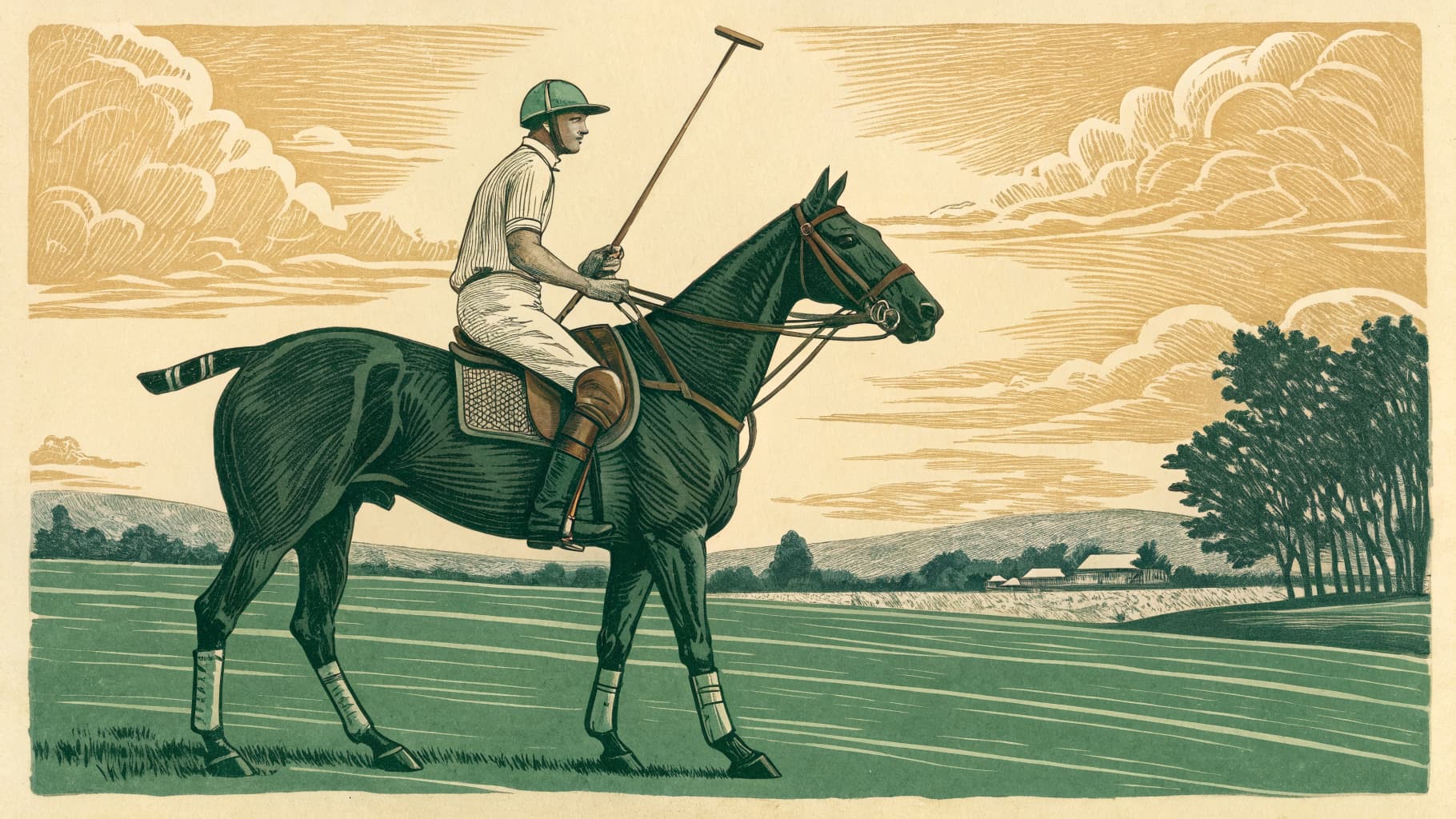
Buying a polo pony is not like buying a hack. You are buying a trained athlete with a job description: stop hard, turn faster, take a bump without losing her head, and give you the same ride in chukka six of the season as she did in chukka one. Get the buying decision right and one good pony will carry your polo forward for years. Get it wrong and you will spend two seasons and a great deal of money discovering the difference between a pony that plays polo and a pony that has been on a polo field.
This guide walks through the whole process as it works in the UK — what actually matters in the animal, how to read a listing, what a fair trial looks like, and the paperwork that protects you.
Decide what you need before you look
The most common buying mistake in polo has nothing to do with the pony. It is buying for the player you would like to be rather than the player you are.
Be honest about three things:
- Your level. If you are playing your first season of club chukkas, you need a schoolmaster — an older, forgiving pony that knows the game better than you do. Save the sharp, made six-year-old for when your riding has caught up with your ambition.
- Your calendar. A pony that plays two days a week needs a different engine from one doing a full low goal season. Buy for the workload you will actually give her.
- Your budget — all of it. The purchase price is the entry fee. Livery, shoeing, vaccinations, insurance and transport are the subscription. A sensible rule: if the purchase price is all you can afford, you cannot afford the pony.
What actually matters in the pony
Temperament first
Ask any professional what makes a great polo pony and temperament arrives before speed every time. You want a pony that is settled in the pony lines, loads without a fight, and comes back to you between plays. A brilliant but hot pony makes every chukka a negotiation. For amateurs especially, rideability is performance.
A made pony teaches you the game. A green pony makes you pay for every lesson twice.
Age, sensibly read
Polo ponies come into their best work later than most riding horses. Full training starts around five or six, and a well-managed pony plays strongly into her mid-teens.
| Age | What it usually means |
|---|---|
| 4–6 | Green or just made. Cheaper, full career ahead — but needs an educated rider. |
| 7–11 | The sweet spot. Made, proven, plenty of seasons left. Priced accordingly. |
| 12–16 | The schoolmaster years. Ideal first pony; check legs and workload history. |
| 17+ | For light chukkas only. Can be a wonderful confidence-giver at the right price. |
An older pony with clean legs and an honest record is almost always a better first buy than a young pony with potential. Potential is the most expensive word in horse sales.
Height and build
Most playing ponies stand between 15.0hh and 15.3hh. Bigger is not better: you want a low, balanced athlete that can sit down in the stop and come out of the turn with you still on board. What matters more than the number is how the pony carries you — a compact 15.1hh mare that stops square will beat a leggy 16hh horse in every ride-off you care about.
Thoroughbred or Argentine?
British club polo runs largely on two sorts of pony, and the difference matters to your budget. Retrained thoroughbreds — many of them ex-racehorses given a second career — are the affordable backbone of the game here: quick, brave and plentiful, though how well the racing brain converts to stopping and turning varies pony by pony. Purpose-bred Argentine ponies are a different proposition. The Polo Argentino has been bred for this game over generations; an imported Argentine pony is usually properly made before she ever sees a British field, and she is priced accordingly — expect proven Argentine breeding to sit at the top of, and often well above, the ranges later in this guide.
Neither is "better" — a good pony is a good pony. But know which you are looking at, because it explains the price tag. Listings on PoloPonies state breed and country of origin up front, so you can tell before you pick up the phone.
The record, not the story
Every seller has a story. What you want is a record: where has this pony played, at what level, with what sort of rider on board? A pony that has done three full seasons of club and low goal polo with an amateur owner tells you nearly everything you need to know. On PoloPonies, listings state the playing level and schooling status up front, so you can filter for the record before you fall for the photograph.
The trial: ride before you buy
Never buy a polo pony you have not ridden, and try not to buy one you have only stick-and-balled. A fair trial, which any confident seller will welcome, looks like this:
- Watch the seller ride first. How the pony goes for the person who knows her is your baseline.
- Ride her yourself on the flat. Stop, turn, back up, ride off an imaginary opponent. Is she listening, or tolerating you?
- Stick and ball. Swing on both sides, check she tracks the ball and stays straight through the swing.
- Play a practice chukka if at all possible. Ponies are herd animals playing a contact sport; some are transformed — in either direction — the moment other ponies are on the field.
Many UK sellers are open to a trial in slow chukkas or a stick-and-ball session — listings on the marketplace say so explicitly. If a seller will not let you ride the pony at all, walk away, whatever the explanation.
The vetting
A pre-purchase examination is not optional on any pony you cannot afford to lose. For a playing pony, use a vet who knows polo — the sport loads hocks, fetlocks and the front feet in ways a general flatwork vetting can underweight. The British Horse Society's guidance on pre-purchase examinations explains the five-stage format; ask for the full five stages, with flexion tests, and X-rays on anything at the sharper end of your budget.
Expect to pay a few hundred pounds. It is the cheapest insurance you will ever buy: a vetting that fails has just saved you the price of the pony.
Sellers who list as open to vetting are telling you something about their confidence. Treat it as the meaningful signal it is.
Paperwork, briefly but non-negotiably
UK law requires every equine to have a passport, and since 2020 a microchip as well. Before money moves:
- See the passport and check the description and markings match the animal in front of you.
- Check the microchip number against the passport at the vetting.
- Get a receipt recording the price, the date, both parties and any conditions (for example, subject to vetting).
- Transfer the passport into your name with the issuing organisation within 30 days.
If you plan to play registered tournaments, your pony's welfare standards and equipment fall under the Hurlingham Polo Association rules — worth reading before your first game, not after.
What does a polo pony cost in the UK?
Honest ranges, as of this season: a steady club-level schoolmaster typically sells between £8,000 and £12,000; a made low goal pony in her prime £14,000–£20,000; and proven medium goal ponies £25,000 upwards, sometimes well upwards. Below £8,000 you are buying age, greenness or a question mark — occasionally a genuine bargain, more often a project.
These bands assume home-produced, largely thoroughbred-based ponies. Imported Argentine-bred ponies with a proven record command a premium over them — often a substantial one — and for a made mare with good bloodlines the ceiling is wherever the seller says it is.
Remember that the difference between a £10,000 pony and a £15,000 pony is usually one season of professional schooling — which you would otherwise pay for anyway, at similar money, with an uncertain result.
Where to look
The traditional routes — word of mouth, club notice boards, a call to a dealer — still work, but they show you only the ponies your circle happens to know about. Browse the ponies for sale on PoloPonies to see what is genuinely on the market: every listing states age, height, playing level and schooling status, sellers are verified, and contacting them is free, with no commission on either side.
And if this guide has you eyeing the pony line thinking one of yours deserves a better home than the field — listing a pony takes about ten minutes and costs nothing.
Buy the settled one. Your handicap will thank you.
More from the Journal
No. 004 · Buying Guides
Polo pony vettings: what the five stages really tell you
What a five-stage polo pony vetting covers, what polo adds to the standard exam, when X-rays are worth it, and what to do when findings turn up.
18 July 2026 · 7 min read
No. 002 · Buying Guides
How much does a polo pony cost? UK prices explained
How much does a polo pony cost in the UK? Honest price bands from club schoolmaster to medium goal, what drives them, and the true annual cost of keeping one.
18 July 2026 · 6 min read
No. 005 · Polo Life
What breed are polo ponies? Thoroughbreds, mostly
What breed are polo ponies? None — it's a job title. Where playing ponies come from: Thoroughbreds, ex-racehorses and Argentina's purpose-bred Polo Argentino.
18 July 2026 · 5 min read