

Polo pony vettings: what the five stages really tell you
What a five-stage polo pony vetting covers, what polo adds to the standard exam, when X-rays are worth it, and what to do when findings turn up.
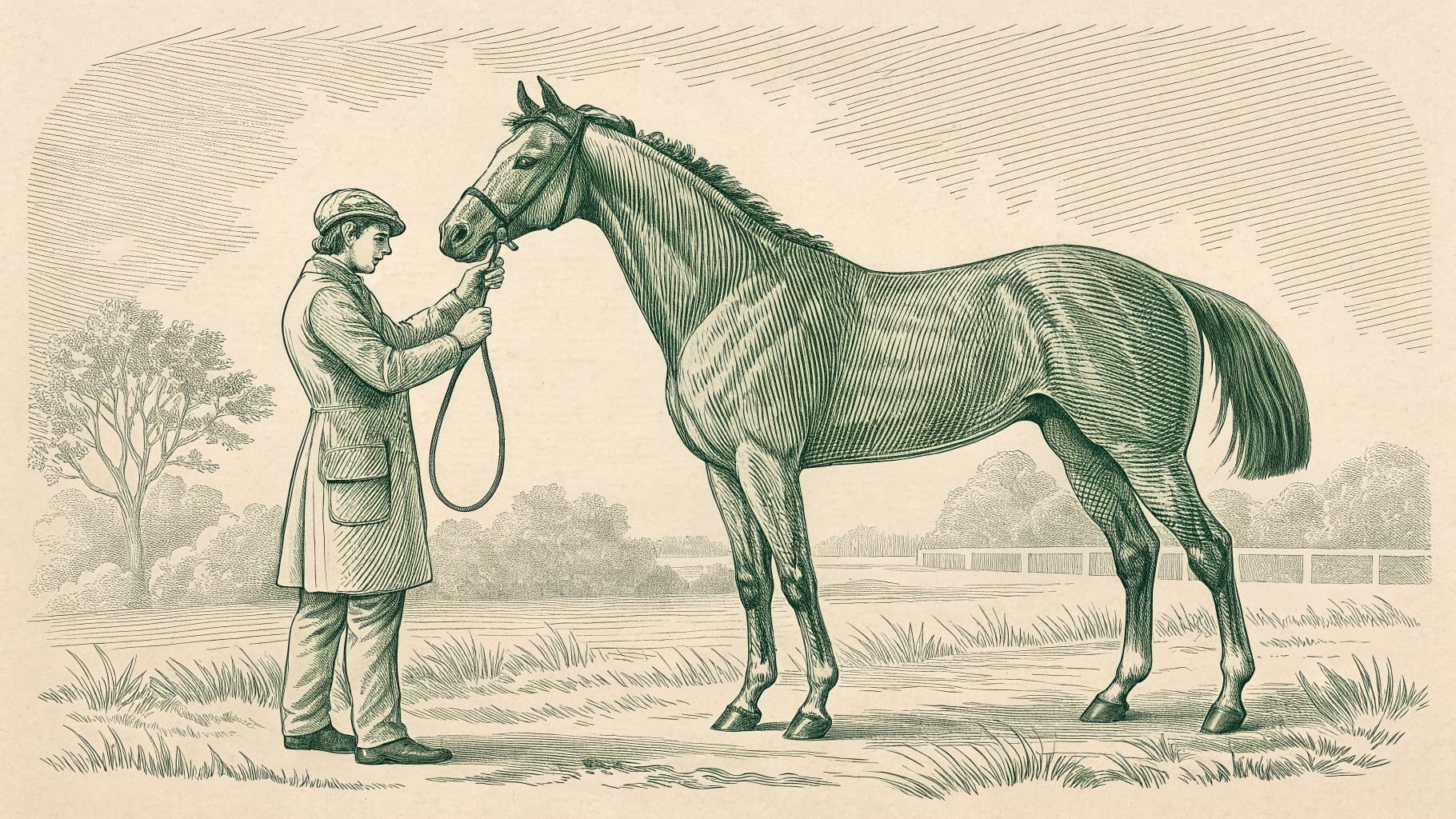
A polo pony vetting is where the romance of the purchase meets the evidence. You have seen her play, ridden her, probably already pictured her in your string — and now a vet who works for you and nobody else spends a couple of hours establishing whether her body can actually do the job you are buying it for. It is the least glamorous step in buying a polo pony, and the one most likely to save you from a five-figure mistake.
This guide explains the standard five-stage examination as it runs in the UK, what polo adds to it, when X-rays are worth their money, and — most usefully — what to do when the vetting turns something up. Because most vettings turn something up.
Two-stage or five-stage polo pony vetting?
The UK pre-purchase examination follows a format agreed across the veterinary profession and horse-owning bodies, described plainly in the British Horse Society's guidance on buying a horse. It comes in two sizes. The limited two-stage vetting covers the examination at rest and a walk and trot in hand. The full five-stage adds strenuous exercise, a rest period and a final trot-up.
For a companion or an unbacked youngster, two stages can be a defensible economy. For a playing pony it is a false one. Polo problems are work problems: the heart murmur that matters, the wind that does not hold, the low-grade lameness that appears only once the pony has galloped and stopped — none of it shows in a horse walked up a yard. If the pony is going to play, ask for all five stages. The difference in fee is small; the difference in what you learn is the whole game.
The five stages, and what each one tells you
| Stage | What happens | What it tells you |
|---|---|---|
| 1. Examination at rest | Heart and eyes checked, teeth aged; limbs, back and feet gone over by hand; microchip scanned | Baseline health and conformation, old splints and scars — and that the pony matches her passport |
| 2. Trot-up in hand | Walk and trot on firm level ground, tight turns, backing; flexion tests of each limb, often a lunge on a firm circle | Soundness at low speed, and a first hard look at the joints |
| 3. Strenuous exercise | Ridden work sharp enough to properly raise heart rate and breathing | Heart rhythm and wind under load; lameness that only appears in real work |
| 4. Period of rest | Twenty to thirty minutes stood quietly, heart monitored | How quickly the engine recovers — the fitness question polo asks six times an afternoon |
| 5. Second trot-up | A final trot in hand | Stiffness or lameness that the exercise has brought out |
Stage one also handles the dull but vital administration: have the vet scan the microchip and check it against the passport there and then. It takes thirty seconds and closes off the oldest trick in horse dealing — the paperwork of one animal travelling with a different one.
Two of the stages deserve a polo player's particular attention. Stage two, because the flexion tests live there: the vet holds each joint firmly flexed for around a minute, then has the pony trotted straight off and watches the first strides. It is a crude test and every vet knows it — a positive flexion is a conversation, not a verdict — but on a pony whose entire job is flexing hocks and fetlocks under load, it is a conversation you want to have before the money moves.
And stage five, because it is quietly the polo stage. Plenty of horses trot up sound cold and again after light work. A pony that comes out of stage three's exertion stiff or short has told you exactly what she will feel like in the fifth chukka — you have simply learned it at the vet's prices rather than the season's.
What polo asks that a flatwork vetting doesn't
A standard vetting assumes a standard job — hacking, a bit of jumping. Polo is not that. The stop loads the hocks harder than almost anything else an amateur's horse is asked to do; the hard stop and the ride-off drive weight down through the front fetlocks and front feet; and the game does all of it at speed, on summer ground, twice a week. A vetting conducted by someone who has never watched a chukka can be entirely competent and still underweight the exact structures polo wears first: hocks, front fetlocks, front feet.
So use a vet who knows polo — in the polo counties this is easy to arrange, and any club will give you names. And give them the real job description: how many chukkas, at what level, how many days a week. A pre-purchase examination is formally an opinion on the horse's suitability for a declared use. Declare the right use and the whole examination sharpens around it.
When X-rays earn their money
X-rays are not part of the five stages, and most club-level purchases complete happily without them. They earn their place at the sharper end of the budget — broadly, the made low goal pony and upwards in our guide to what a polo pony costs — where the sums justify looking inside the structures the sport punishes. Your vet will propose views based on what the clinical exam found, usually starting with front feet, front fetlocks and hocks; you do not need to image the whole horse.
Two further cases make the plates cheap. If the vetting has thrown up a finding — a reaction to a hock flexion, say — X-rays turn a suspicion into information you can negotiate with. And insurers may require radiographs above certain values or for loss-of-use cover, so ask your broker before the vetting, not after it.
What it costs
For a five-stage vetting, expect a few hundred pounds — £250 to £400 is typical, varying with region and travel. A two-stage runs cheaper; X-rays add to the bill per view, and a thorough radiographic survey can push the total towards four figures. Set any of it against the price of a made playing pony and the arithmetic ends the discussion.
Read it as findings, not pass or fail
The certificate you receive will not say passed. Modern certificates do not deal in pass and fail: the vet records what was found and gives an opinion on whether those findings prejudice the pony's use for the purpose you declared. This matters enormously in polo, because the ponies most worth buying are rarely blank sheets. A twelve-year-old schoolmaster with three hundred chukkas behind her will have wear — an old splint, a little joint change, feet that have seen some seasons. The question is never whether the pony is perfect. It is whether what the vet found matters for two chukkas of club polo a week, and the certificate is written to answer exactly that.
A vetting does not buy you a perfect pony. It buys you an accurate one.
Keep the certificate safe, because it has a second life: insurers routinely ask for it when you cover a pony of any real value, and findings noted on it may resurface as exclusions on the policy. Read those exclusions before you rely on the cover, not after the injury.
When the vetting throws something up
Sooner or later a vetting will hand you a finding, and you have three honest moves.
- Renegotiate. Findings have a market value. A pony with a managed old issue is worth less than the same pony with a clean sheet, and a reasonable seller knows it. Go back to the table with the certificate, not with feelings.
- Walk away. If the finding sits exactly where polo bites — a hock, a front fetlock, a foot — and the vet is guarded about the pony holding up to the work you declared, believe them. This is why you agree the sale subject to vetting and put any deposit in writing on those terms.
- Buy with your eyes open. Plenty of good polo careers are played on managed findings. If the vet is comfortable, the price reflects it and you are willing to do the management — the right shoeing, a sensible workload, the pony kept well within the welfare standards the Hurlingham Polo Association sets for the game — a known issue can still be a good buy. What it can never be is a surprise.
What "open to vetting" tells you about a seller
A seller who invites the examination expects it to go well. When you browse the ponies for sale, treat open to vetting on a listing as the confidence signal it is — and treat resistance to a five-stage examination as information of a different kind. There is no legitimate reason to refuse one; the buyer is paying, after all.
And if you are on the other side of the deal: saying so up front is the cheapest credibility a seller can buy, because serious buyers filter for it. Listing a pony takes about ten minutes, and open to vetting is the first box worth ticking.
Two hours of a good vet's time, a few hundred pounds, against years of chukkas and a five-figure cheque. Book the five stages.
More from the Journal
No. 002 · Buying Guides
How much does a polo pony cost? UK prices explained
How much does a polo pony cost in the UK? Honest price bands from club schoolmaster to medium goal, what drives them, and the true annual cost of keeping one.
18 July 2026 · 6 min read
No. 001 · Buying Guides
How to buy a polo pony: the complete UK guide
What to look for, what to ask and what to pay when buying a polo pony in the UK — age, height, playing level, vettings, trials and paperwork, explained plainly.
17 July 2026 · 7 min read
No. 005 · Polo Life
What breed are polo ponies? Thoroughbreds, mostly
What breed are polo ponies? None — it's a job title. Where playing ponies come from: Thoroughbreds, ex-racehorses and Argentina's purpose-bred Polo Argentino.
18 July 2026 · 5 min read