

What breed are polo ponies? Thoroughbreds, mostly
What breed are polo ponies? None — it's a job title. Where playing ponies come from: Thoroughbreds, ex-racehorses and Argentina's purpose-bred Polo Argentino.
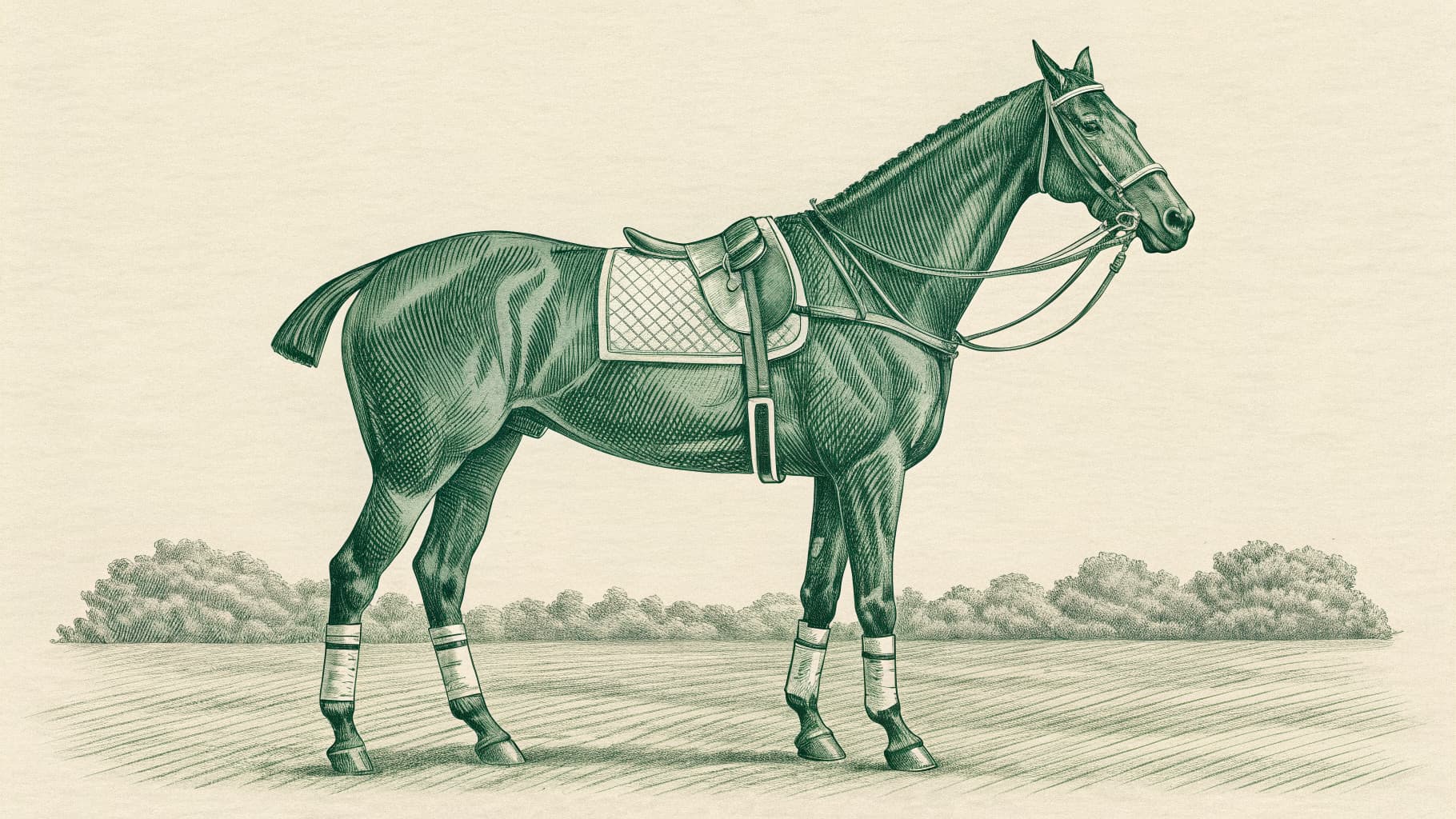
"Polo pony" is one of the sport's quiet jokes: it names an animal that is neither a pony nor a breed. Ask what breed are polo ponies and the honest answer is that there isn't one — no studbook anywhere registers "polo pony", and the animal doing the job is a horse, selected and schooled for a particular game rather than born into a category. In Britain most playing ponies are Thoroughbred or something very close to it; the most expensive in the world are Argentine, bred for polo over generations with the single-mindedness other countries reserve for racehorses. The name, the types and the price tags all make sense once you know the history.
Not a pony, and why the name stuck
The word "pony" ordinarily means an animal standing under about 14.2 hands, and early organised polo genuinely was played on mounts that size — because the rules said so. For decades the game had a height limit for playing mounts. It crept upward over the years, was widely bent, and was abolished altogether after the First World War, once it was plain the game was faster and better on proper horses. The limit went; the word stayed. British polo's governing body, the Hurlingham Polo Association, still calls them ponies, and so does everyone from the pony lines to the commentary box.
A modern playing pony typically stands somewhere between 15 and 16 hands — a small to middling horse, in other words, chosen at that size because a lower, more compact athlete stops and turns better with a rider swinging a mallet off one side.
The look that goes with the job is uniform, not breeding: the hogged mane, the tied-up tail and the white bandages are turnout for safety's sake, applied identically to a £5,000 ex-racehorse and a £50,000 Argentine mare.
What breed are polo ponies in Britain?
Overwhelmingly Thoroughbred, or near enough that the difference is academic. That is no coincidence: racing and polo want much the same engine — a horse that accelerates hard, gallops in short savage bursts and recovers quickly enough to do it again. Britain produces such horses in quantity, because racing breeds far more Thoroughbreds than it can employ.
So a large share of the ponies playing club chukkas here started life in a racing yard. Bought on for sensible money when the first career stalled, given a season or two of patient re-schooling, they become the affordable backbone of the British game: quick, brave and plentiful. Retraining of Racehorses, British racing's official charity for former racehorses, lists polo among the second careers the breed takes to well — and the polo field is full of the evidence. Not every ex-racehorse converts, it should be said. Stopping hard and turning on a plate are precisely the things racing never asked of them, and some never quite forgive the request. But when the brain is right, the raw material is unbeatable value.
Alongside the ex-racehorses sit home-produced ponies: Thoroughbreds bred outside racing, and crosses that put Thoroughbred speed over steadier stock. Breeding for polo in Britain is a cottage industry rather than an institution, but it produces some very honest ponies.
The Argentine answer: the Polo Argentino
Argentina dealt with the breed question differently — by creating a breed. The foundation was the Criollo, the tough, tireless working horse of the pampas, descended from the Iberian horses the Spanish brought to South America. Crossed with imported Thoroughbreds, the Criollo contributed hardiness, balance and cattle-working agility; the Thoroughbred contributed speed. Then came the part no other country has matched: generation after generation of breeding the best playing mares to the best playing stallions, selecting on performance in the game itself. The result is recognised in Argentina as a breed in its own right — the Polo Argentino, with its own registry and breeders' association.
Britain borrows its polo horses from racing. Argentina breeds its own, for the job, on purpose.
That, in one line, is why Argentina dominates the world supply of made ponies. Polo there is professional at a scale it is nowhere else, horsemanship runs deep, and there is grass enough to raise ponies in strings rather than singles. An Argentine pony offered to a British buyer is usually properly made before she ever sees an aeroplane — schooled by people who make ponies for a living, proven in a country where the standard of play is unforgiving. She is priced accordingly, and imports command a premium that is partly genuine quality and partly brand. At the very top of the game the breeding is more deliberate still — embryo transfer is routine and the most celebrated mares have been cloned — but that is elite-professional territory, not something a club buyer will meet.
The rest of the map
Between the two poles sit other sources you will meet in British polo. New Zealand and Australia run the British recipe at a distance: big racing industries, a surplus of Thoroughbreds and a strong horse culture, and ponies from both countries have long had a good name in the game here. Add the home-produced crosses above and the occasional continental import, and the honest summary of British polo is Thoroughbred blood almost everywhere, arriving by different roads.
What breeding means when you are buying
Less than you might hope, and more than you might like — in that order.
At club level, papers do not stop the ball. Temperament, trainability and an honest playing record matter far more than anything written in a passport; a proven schoolmaster of no traceable breeding whatever will do more for your polo than a beautifully bred mare who is still learning her trade. Judge the pony in front of you — how she is to handle, how she comes back to you between plays, where and at what level she has actually played. Our guide on how to buy a polo pony walks through that judgement in full, and the British Horse Society covers the general horse-buying sense — vettings, passports, paperwork — that applies to polo unchanged.
Where breeding does bite is the price. At the amateur end of the game, pedigree explains what you pay more reliably than it predicts how you play: Argentine breeding sits at the top of the market whether or not you can use the extra quality, and an honest British ex-racehorse may give you most of the ride for a fraction of the money. We have set out real numbers in how much a polo pony costs — read it before you fall in love with an import.
The practical upshot: know what you are looking at before you call. Browse the ponies for sale and you will see that every listing states breed and country of origin up front, alongside age, height and playing level — so the Thoroughbred-versus-Argentino question is answered before the first phone call, not after. And if you have bred or made a pony yourself and the string is getting long, listing her for sale takes about ten minutes and costs nothing.
So — what breed are polo ponies? Horses, mostly Thoroughbred, occasionally with an Argentine passport and always with a job. The pedigree is the story. The chukka is the proof.
More from the Journal
No. 004 · Buying Guides
Polo pony vettings: what the five stages really tell you
What a five-stage polo pony vetting covers, what polo adds to the standard exam, when X-rays are worth it, and what to do when findings turn up.
18 July 2026 · 7 min read
No. 003 · Selling Guides
How to sell a polo pony: pricing, photos and paperwork
How to sell a polo pony in the UK — realistic pricing, a listing built on the record, honest photos, trials, vettings and the paperwork that closes the sale.
18 July 2026 · 6 min read
No. 002 · Buying Guides
How much does a polo pony cost? UK prices explained
How much does a polo pony cost in the UK? Honest price bands from club schoolmaster to medium goal, what drives them, and the true annual cost of keeping one.
18 July 2026 · 6 min read